All posts by Parish Secretary

Introducing the ESV-CE Lectionary – 3

From next Sunday, we shall hear the Scriptures being proclaimed at Mass from a new translation, the English Standard Version – Catholic Edition (ESV-CE). When this happens, two significant factors are worthy of attention, one ecumenical and the other global.

Firstly, the roots of the English Standard Version (ESV) are to be found amongst Protestant evangelical scholars seeking to follow in the tradition of the King James Bible of 1611 and its twentieth century descendant, the Revised Standard Version (RSV). Notably, the New Testament element of the King James Bible was influenced by a Catholic translation prepared in Rheims in 1582 by members of the English College at Douai, part of which moved ultimately to Ushaw following the French Revolution. Also of note is that the RSV is one of the English Bible translations most frequently used in the Catechism of the Catholic Church.

The ESV was reviewed by a team of Catholic biblical scholars before permission was granted by the Holy See for the use of the ESV-CE in the liturgy. As such, although the development of the ESV-CE is not formally an ecumenical venture, this work of translation is one in which Catholics and Protestants have been able to collaborate in a way envisaged by the Second Vatican Council in its document ‘Dei Verbum’.  

The second significant factor is that the ESV-CE has been the fruit of the work of the Catholic Church in India. Cardinal Oswald Gracias, Archbishop of Bombay (Mumbai), has described the ESV-CE as “the Indian Church’s contribution to the universal Church.” We often hear of the global church and of a shift away from a Western-centric approach to the church’s life. In the ESV-CE, we have a tangible example of this shift and of the reminder we sometimes need that the church is indeed Catholic, that is, universal.   

Oppose Assisted Suicide

Bishops are calling on Catholics in England and Wales to unite in prayer and compassionate action to oppose assisted suicide. A new bill on assisted suicide has been tabled by Kim Leadbeater MP and is before the House of Commons. The proposed legalisation undermines the sanctity and dignity of human life. We are a praying community. Please pray that our lawmakers will act wisely and will value human life. Please contact your local MP to express your views. The charity Right to Life UK has a simple online mechanism to do this with a provided factual letter. It can be found on the Bishops’ Conference website together with materials explaining the Church’s grave concerns about the proposed legislation at;

Oppose Assisted Suicide

Thank you for your prayers and action. Bishop Stephen.

There are also pre-printed postcards available in church that you can send to your MP to express your concern. The latest statement from the Bishops of England, Wales and Scotland can be read here.

My words will not pass away

In Jesus’ time, his people lived under the power of the Roman Empire. They longed for freedom and many hoped that Jesus would lead an uprising against Rome; but Jesus was not that kind of King. Instead, he taught his disciples that all the powers of this world would come to an end. They could read the signs of nature; they knew that a fig tree would grow and develop according to its nature. Jesus taught them to watch for the signs of the coming of the end times. Those who are powerful in this world will answer to God’s judgement, as we hear in the First Reading from the prophet Daniel.

As we look around our world, we can see wars and natural disasters, violence and turmoil. We may feel anxious and fearful, but we can stand firm if we trust in God’s love and mercy. The Opening Prayer of today’s Mass asks that we may ‘serve with constancy.’ The heavens and the earth themselves will pass away, but the words of Christ will not pass away. His teaching is a message for all time: a Word that we can trust.

Month of The Holy Souls

November is the month in which Catholics bring to mind those who have died and pray for their souls. From All Souls Day (November 2nd), our Parish Book of Remembrance will be placed on the font and opened for you to write within it the names of your departed family members and friends. If you cannot come along to church in person, please e-mail Andy Doyle (andydoyle1066@sky.com) and he shall arrange for names to be added.

Introducing the ESV-CE Lectionary – 2

When the English Standard Version – Catholic Edition (ESV-CE) Lectionary is introduced on 1st December, we will hear the Scriptures spoken at Mass in English as we have for many years, but with a new accent and dialect. 

The translation of the Bible has a long history, starting in the Bible itself as we read in Nehemiah, chapter 8. Here in the North East, our own local Saint Bede translated the Gospel of John from Latin into Old English in the eighth century.

There are broadly two methods that can be used in approaching the work of translation.

In the Jerusalem Bible that we have become accustomed to hearing at Mass over the last 50 years, the translators used what is sometimes called “dynamic equivalence.” This method does not adhere strictly to a word-for-word translation but attempts a sense-for-sense translation that the translators believe communicates the meaning of the original Hebrew and Greek texts.

In the ESV-CE, the translators have used what is sometimes called ‘formal equivalence’, a more literal, word-for-word translation which attempts to stay as close to the original Hebrew and Greek texts as possible whilst rendering the text into readable English. In selecting the ESV-CE for our new Lectionary, our bishops are keen for us to get as close to the original texts as possible.     

Bishop Dunn Memorial Lecture

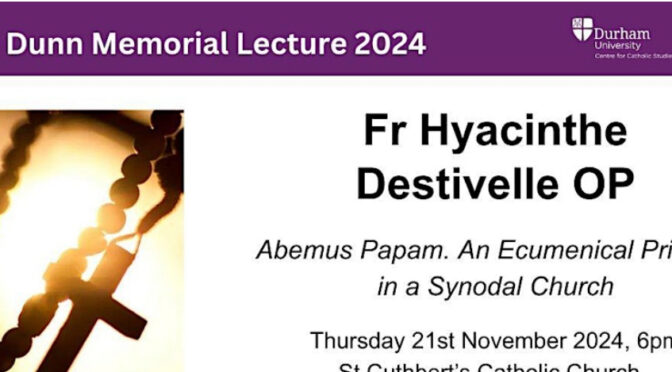
The Centre for Catholic Studies at Durham University is pleased to announce that booking is now open for the Bishop Dunn Memorial Lecture, with Fr Hyacinthe Destivelle giving a talk entitled Habemus Papam. An Ecumenical Primacy in a Synodal Church.

The lecture will take place here at St Cuthbert’s Catholic Church, Old Elvet, DH1 3HL, on the 21st November 2024 at 6pm, and will be followed by a drinks reception. This is to be an in-person event only, with no hybrid option. Please book your attendance at the following link:

https://www.eventbrite.co.uk/e/700199344087

She gave all she had

The scribes were experts in the Jewish Law – men who held a respected place in the community. In today’s Gospel, Jesus is teaching in the Temple in Jerusalem and he accuses some of the scribes of hypocrisy. They are more concerned with their own status and importance than with serving God. And worse, they take advantage of their privileged position to exploit widows, the poorest and most vulnerable members of society. Jesus was angered by those who used the Temple for their own ends and he denounced the corrupt scribes.

In contrast, a poor widow gives all she has to support the Temple. Like the widow who helps the prophet Elijah in the First Reading, she shares what she has and puts her trust in God. Jesus recognises and celebrates her generosity.

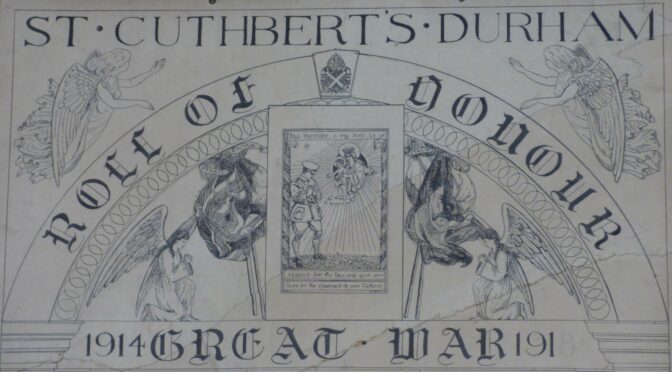
On Remembrance Sunday, we remember those who served and died in the two World Wars, and in many other conflicts. They gave all they had, sacrificing their lives for our freedom. We give thanks for their sacrifice and, remembering the many wars that rage today, we pray for peace throughout the world.

Introducing the New Lectionary – 1

From this Advent, as a new liturgical year begins, we will again hear the great and familiar stories of our salvation, proclaimed at our Sunday and daily Masses, though in a new voice. The order of the stories and the characters within them will remain exactly the same, but the words we use will, for many, sound somewhat different. Be assured that, though some phrases may initially be unfamiliar, the story remains the same one that we already know.

From Sunday 1st December, a different translation of the Bible will be used in our Lectionary at Mass. The Lectionary brings together the readings for the celebration of the Liturgy and, for the last fifty years, most Catholics in these lands have heard them proclaimed from a translation known as “The Jerusalem Bible.” 

The Lectionary itself needed to be updated to, amongst other things, include the feasts of the new saints with whom the Church has been blessed over the last half of a century. The Bishops have also taken the opportunity to adopt a different English translation of the Hebrew and Greek languages in which the Bible was recorded. This translation is known as the “English Standard Version – Catholic Edition (ESV-CE).” Over the next few weeks, we will learn a little more about some of the features of this translation.

The Source

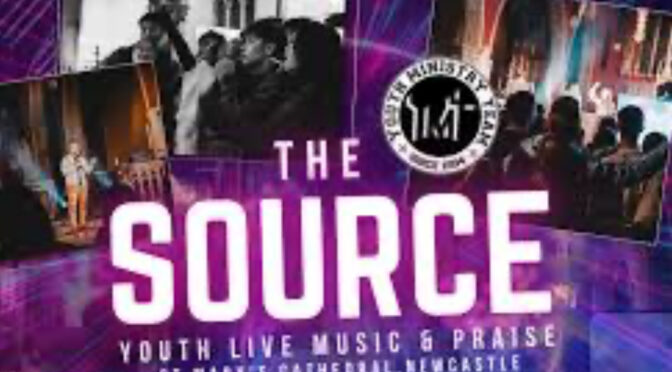
Our diocesan event for young people in school Year 9 upwards returns on Thursday 14th November at St Mary’s Cathedral, Newcastle. Adoration, praise and worship; pray and celebrate with other young adults. Doors open 6.30pm, event begins 7.00pm. Details on the Youth Ministry Team website.

The greatest commandment

The greatest commandment

A scribe asks Jesus which is the greatest of the commandments. In reply, Jesus goes back to the roots, to God’s commandment to the chosen people in the Old Testament: ‘Listen, Israel! The Lord our God is the one Lord…’ Devout Jews still pray this verse every day, as a reminder that God calls his people to give their lives to him without compromise. Jesus adds another commandment, also from the Old Testament: love your neighbour as yourself. These are the two greatest commandments. This is Jesus’ summary of his teaching.
Those two commandments are just as relevant for us today. We can be tempted by the false gods of money, success or popularity. We can reduce our faith to rules that tell us who is ‘in’ or ‘out,’ as the scribes and Pharisees often did. Jesus challenged them because he had come to offer mercy to everyone, righteous and sinners. No one was ‘out’ for him. If our love of God is real, it will move us to show love for our neighbours too. The scribe who questioned Jesus saw that he had spoken wisely. Let us listen to his wisdom.

Volunteer Census

The Diocese is currently carrying out a volunteer census in our parish. This is to ensure we identify all our volunteers, to offer support and appropriate training and recognition for the important part all play in the life of our parish.

A volunteer is anyone who gives their time freely and regularly to assist anywhere within the Parish, School, or Diocese. This is for all volunteers e.g coffee makers, readers, welcomers, choir etc.

If you volunteer within the Parish, Chaplaincy, School or Diocese please complete one of the forms which will be available at the back of church or at Weblink: https://bit.ly/DHNVolunteers

Volunteering is a grace from God and volunteers are the strength of the Church – thank  you for your service to our community.

CCS Book Launch Series

Wednesday 6th November 2024, 5.30pm – Becoming Apostolic: Conversations with Older Roman Catholic Sisters

Author: Dr Catherine Sexton, Respondents: Prof. Karen Kilby (CCS Director), Prof. Clare Watkins (Durham and the University of Roehampton) and Sr Jo Robson (Carmelite Nuns)

In her latest publication, Dr Catherine Sexton seeks to understand how sisters make meaning and sense of their apostolic vocation in old age, and how this contributes to the evolving theology and identity of apostolic religious life for women. She interviewed and drew on the lived experience and narratives of a group of ageing sisters from five congregations, in which the sisters articulated three distinct and emerging forms of ministry, through which they contend with the loss of active ministry, moving away from a task-based identity, towards one of being apostolic.

Please register to join this free online event at the following link: https://www.eventbrite.co.uk/e/1044660968077