Lent Day of Reflection at Ushaw

Lent is a time of preparation for Holy Week and Easter.  The Lent Day of Reflection at Ushaw on Friday 15th March invites us to reflect on the phrase “Forgive us our trespasses, as we forgive those who trespass against us” from the Lord’s Prayer.  The day will also include Mass in St. Cuthbert’s Chapel, and Stations of the Cross. 

The day starts at 10.15am, with refreshments on arrival, and finishes by 3.30pm.  The Day of Reflection costs £10.  Bring your own lunch, or lunch can be bought in Ushaw’s café. 

Tickets available at https://ushaw.org/whats-on-at-ushaw/

Summary of Listening Exercises, Result of Questionnaire and Bishop Stephen’s Response

On our diocesan website https://diocesehn.org.uk/ you will find all the summaries from the various listening exercises that have been running since the summer of 2023, and the results of the Questionnaire for the Dicastery of Bishops Report from March 2023. These are together with Bishop Stephen’s response to what has been presented to him. He reflects on the past, present and our future together. The documentation is necessarily lengthy – too lengthy for a pastoral letter. If you wish to have hard copies of all or parts of the suite of documents, then please contact the parish office.

Come and See

Priestly Vocation Discernment Evenings 2024

Men aged 18+ who think God may be calling them to serve in our Diocese are invited to come and explore their vocation with the Diocesan Priestly Vocations Team.  Meetings started in January and continue each month until December.

For more information, please call the vocations Promoter on 012087 299012, or email vocations promoter@diocesehn.org.uk 

Take all this out of here!

Jesus is the Son of God. He is also truly human and feels the same emotions that we do. In today’s Gospel we see Jesus moved by passion and anger. The Temple in Jerusalem was God’s house on earth; a holy place where all God’s people could go to worship and offer sacrifice. But they could only sacrifice animals that were approved by the Temple authorities and to buy the approved animals, they first had to change their money for special Temple coins. The holy place had been turned into a marketplace and the People of God were being exploited. This, it seems, is the cause of Jesus’ anger; this is what moves him to turn over the tables and drive out the animals and the money changers. The symbolic action shows his disciples that Jesus is full of zeal for his Father’s house.

We should note that, although Jesus is angry, he does not use violence and no one is hurt by his actions. We never see Jesus harm anyone. When he is asked for a sign to justify what he has done, he replies, ‘Destroy this sanctuary, and in three days I will raise it up.’ As John explains, Jesus is foretelling his own suffering and death. The Son of God comes into our world not to do violence but to suffer violence and to give his life for us.

Durham Singers: Dona Nobis Pacem, a concert for peace

“This will be our reply to violence: to make music more intensely, more beautifully and more devotedly than ever before.”  So said Leonard Bernstein, who in his Chichester Psalms draws on his faith to do just that, “for thou art with me”.   In the première of Tarney’s Canticle of Elzabeth, Elizabeth finds peace in the bearing of a child who heralds the dawn of salvation.  Then Vaughan Williams sets a recurring plaintive cry for peace in Dona Nobis Pacem.  If you can, please come and join us in our concert for peace.  Saturday 9 March 2024, 7.30pm, Durham Cathedral. Tickets from the Durham Cathedral website. 

See: https://www.durhamcathedral.co.uk/calendar?date=2024-03-09

LOUDfence. St. Mary’s Cathedral and Newcastle Cathedral 3rd-6th March. Welcome to All

Together with the Anglican Diocese of Newcastle, our diocesan family is privileged to be hosting a LOUDfence at St. Mary’s Cathedral and at Newcastle Cathedral. It will begin at the 11.30 Sunday Mass on the 3rd March at St. Mary’s Cathedral and end with a Service of the Word at Newcastle Cathedral on the 6th March at 7pm. Everyone is welcome to these liturgies and to visit both Cathedrals during the days to offer their prayers and support for all who have suffered abuse within church communities and all contexts. We are invited to leave prayers and messages together with provided items like the prayer ribbons presented to Bishop Stephen at his Installation Mass, which are still tied to his Bishop’s Chair. People can leave their prayers and messages within or outside of the Cathedrals, recognising some people would rather not enter a place of worship. There will be people available for pastoral accompaniment if that is requested. As a diocesan family we pray for all who have suffered abuse and recognise our shared duty to safeguard the vulnerable.

What God is this?

The story of Abraham and Isaac may make us wonder what kind of God we believe in. How could God ask Abraham, his faithful follower, to sacrifice his beloved son? What God truly desired was not the sacrifice of Isaac, but the proof of Abraham’s faith and trust in him. Some followers of pagan religions did sacrifice children to their gods, but the Jews understood the story of Abraham as a stern warning against such a savage custom. They believed in a God of love and mercy.

Just as God revealed his true self to Abraham, in today’s Gospel Jesus reveals his true self to Peter, James and John. They are granted a glimpse of the Son of God in his heavenly glory. It’s too much to take in and the disciples are terrified, even before they hear the voice of God the Father: ‘This is my Son, the Beloved.’ The vision of who Jesus really is will help to prepare them for what lies ahead; his suffering and death.

God did not, in the end, ask Abraham to sacrifice his son. But God did sacrifice his own Son, Jesus, to save us from our sins. As St Paul says, God has given us the greatest possible gift. God has shown us who he really is – the God of love and mercy.

Synod Meeting: Structures and Decision Making

We’re holding a series of meetings to talk about some of the issues raised in the summary document from the Synod Assembly in Rome last October. The third meeting this Sunday 25th February at 2.30pm, at St. Cuthbert’s, and the subject will be ‘Structures and Decision Making’.  

Please come along and share your ideas on the following questions: 

The Synod Assembly agreed that ‘synodality represents the future’, and is an essential part of ‘advising, discerning and decision making’ in the Church. The Assembly also called for obligatory Diocesan and Parish Pastoral Councils. How should we take forward a synodal approach (including Conversations in the Spirit and listening to those on the margins) in our Diocese? And how can we best use this approach in our Partnership and our parishes?

Repent and believe the Good News

We have begun the season of Lent – forty days of penance and preparation. We are setting out on a journey that will lead to Good Friday and on to the great feast of Easter. Today’s Gospel finds Jesus setting out on his own journey. Before he began his public preaching, he went into the wilderness for 40 days. As he prayed, alone in the desert, he must have foreseen what lay ahead; a struggle against evil that would lead to his death on the Cross. Perhaps Jesus was tempted not to follow God’s plan for him. But he put his trust in God his Father. When Jesus heard of the death of John the Baptist, he knew that the time had come to begin the journey. He started preaching in Galilee, his homeland. His message was simple; repent and believe the Good News. Repentance means a change of heart, turning back to God – centring our lives on him. The Good News is that, thanks to the sacrifice of Christ, our sins are forgiven. Lent is the time to repent and believe.

CAFOD Family Fast Day

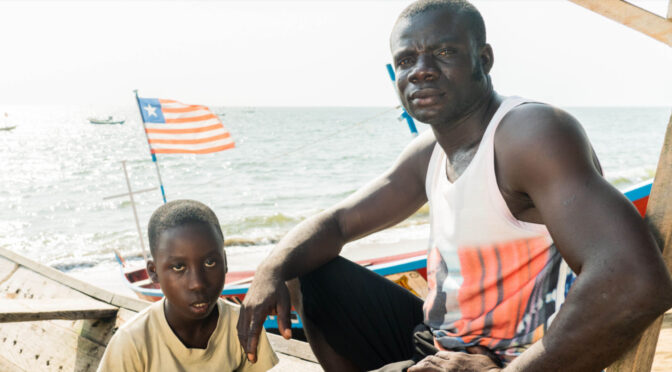
CAFOD Family Fast Day is on Friday 23rd February. This Lent, your donations to CAFOD’s Family Fast Day appeal will help hardworking people like James the fisherman in Liberia with resources, tools and training to feed their families for good. Give today using the envelope or online at cafod.org.uk and please join us in praying with James that our sisters and brothers around the world have what they need to feed their families. 

Be cured!

Leprosy is a painful and disfiguring disease. Nowadays it is curable, but it has not yet been eliminated; people still suffer from leprosy today. In Jesus’ time it was wrongly believed that the disease could be passed on by touch. So anyone who was thought to be suffering from leprosy would be excluded from their family and community, as described in today’s First Reading. They were considered ‘unclean’ and were terribly isolated.

This is the situation of the man who meets Jesus in today’s Gospel. He begs Jesus to cure him. Jesus is moved with compassion and reaches out to touch the man, who is healed at once. He can go home and return to normal life.

Anyone labelled as a ‘leper’ was driven out of the community because of fear and ignorance. Even touching a leper was enough to make Jesus unclean, but he ignored those rules because of his care for the sick man. This Gospel story prompts us to ask ourselves who is a ‘leper’ today. Who are the people that we fear or want to avoid? Jesus calls us to follow his example and reach out with compassion to those who are excluded.