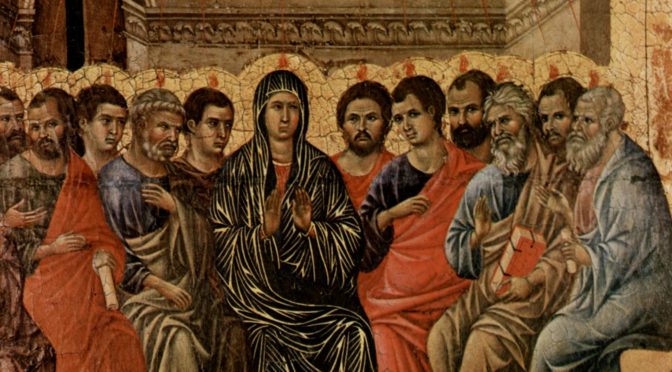
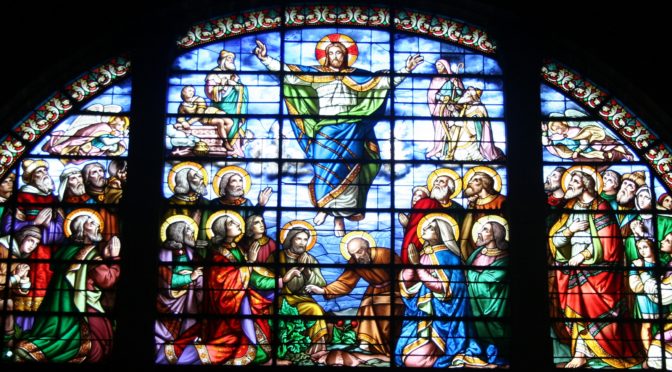
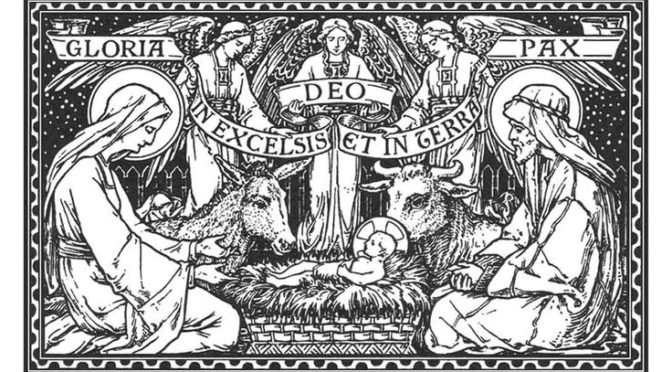
Thank you to everyone who joined us to celebrate Christmas, and to all those who worked so hard in preparing the church, the music and the liturgy.
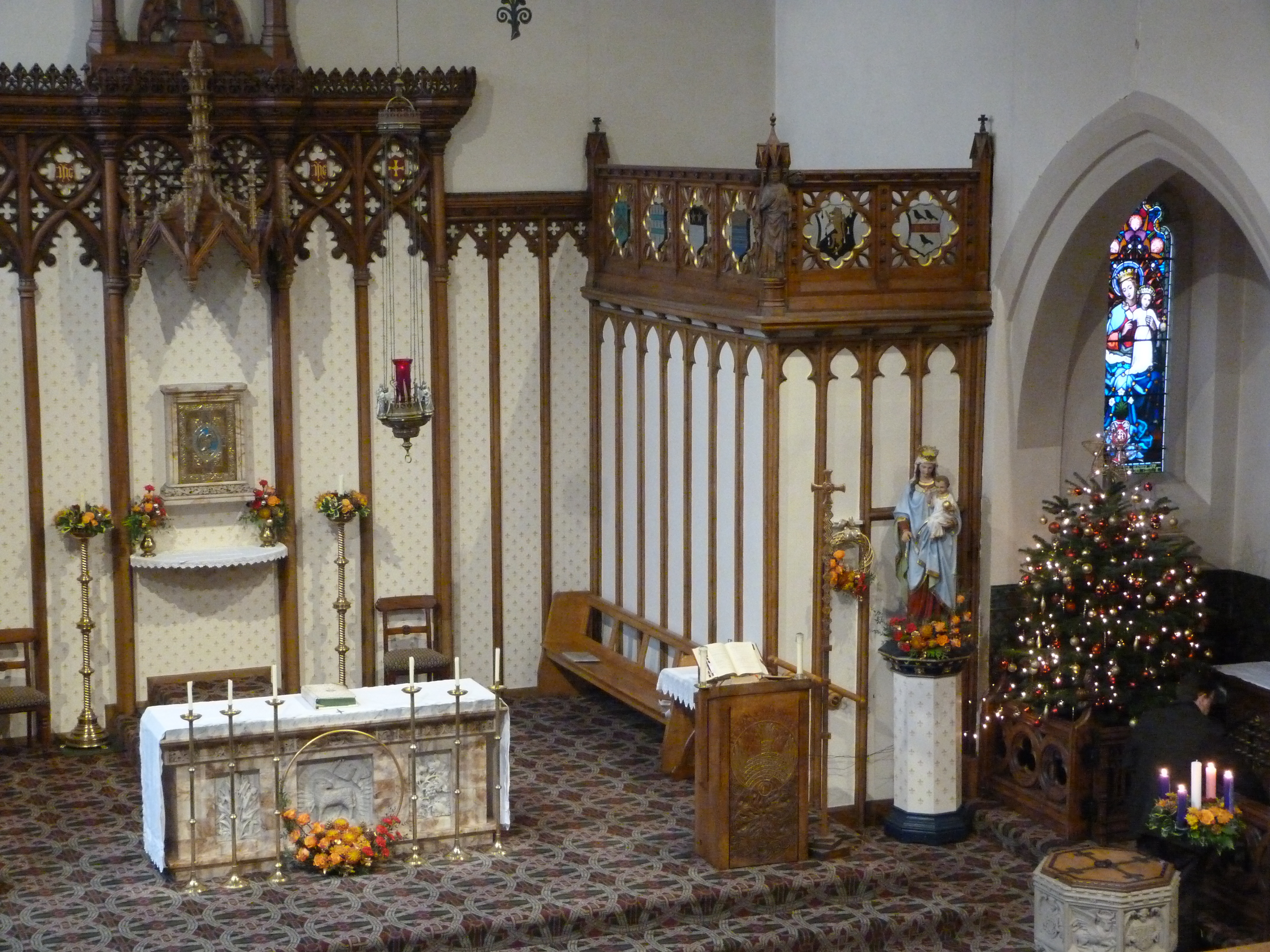

There will be a meeting of the Events Group after 10.00 am Mass on Sunday 18th December.
This is a very informal group which plans social events for the parish, and everyone is welcome. If you have any ideas for events you would like to see happening in the parish, or if you can help organise any of our events, please do come. We’ll be meeting over coffee in the parish room.
If you can’t come to the meeting would like to get involved or make any suggestions, please contact Margaret Doyle, 0191 3783660 or margaretdoyle1066@sky.com
Wednesday 14th December
6:30pm Carols by Candlelight for Parish and Chaplaincy followed by mulled wine and mince pies
Saturday 24th December: Christmas Eve
9:15am Mass
9:45am Sacrament of Confession* (until 10:45am)
Midnight Midnight Mass Doors open 11:15pm
Sunday 25th December: Christmas Day
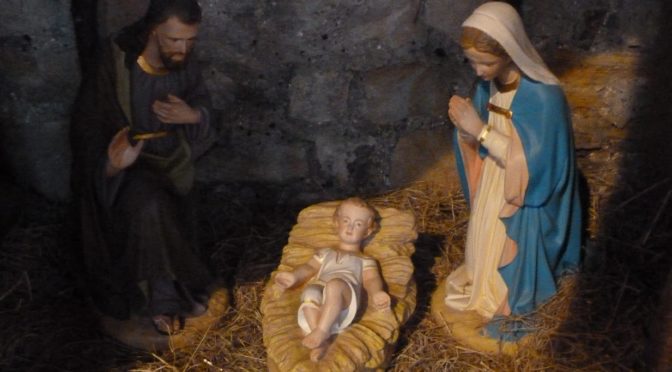
10:00am Family Mass with Blessing of Crib
Please note there is NO evening Mass on Christmas Day
The Reading Group will meet on Tuesday 16 May to discuss Colson Whitehead, The Underground Railroad, and on Tuesday 27 June, to discuss Hans Fallada, Alone in Berlin.
Meetings are at 8pm at Orchard House, New Elvet. If you go to the front entrance, read the notice and dial 48 to be let in.
The group is open to all and new members are welcome. For further information Contact Margaret Harvey . tel 0191 3840080 or margaretharvey@uwclub.net
For the last few months we have been working with neighbouring parishes to put together a proposal for an area partnership. The proposal has now been submitted to the diocese and you can read it here.
our-partnership-proposals-final
If you have any comments or questions, please contact Margaret Doyle on 0191 3783660 or margaretdoyle1066@sky.com
For the last few months, we have been working with neighbouring parishes to put together a proposal for an area partnership. Our proposals are to be submitted to the Diocese by 27 November.
The draft proposal is available here
our-partnership-proposals-draft-2
If you have any feedback, questions or comments, please speak to Margaret Doyle after Mass on Sunday, or contact Margaret on 0191 3783660 or margaretdoyle1066@sky.com
 The next stage of the Forward Together in Hope process is called Exploring the Way with our Neighbours. You can find out more about this part of the process on the Diocesan website at www.hope.rcdhn.org.uk/resources/exploringway_neighbours.php.
There will be a meeting for the Sunderland & East Durham Vicariate on Thursday 20 October 2016 at St Robert of Newminster Catholic School and 6th Form College, Biddick Lane, Washington, Tyne & Wear, NE38 8AF at 7:00pm and everyone is welcome. The purpose of the meeting is:
If you are attending and will need a lift to Washington on 20th October, please speak to Margaret Doyle, or contact her on 0191 3783660 or margaretdoyle1066@sky.com.
‘Look not on our sins, but on the faith of your Church’
This prayer, tucked away between the Lord’s prayer and greeting each other in the peace of Christ, always encourages me. However much I might fail to live up to the calling of Christ, there is a greater body, a greater reality, that holds the faith for me when I am too weak to hold it for myself. My feeble attempts to believe and to follow Jesus often founder, and my most ardent desire to be ‘all for Jesus’ (in the words of Mother Teresa) soon cools.
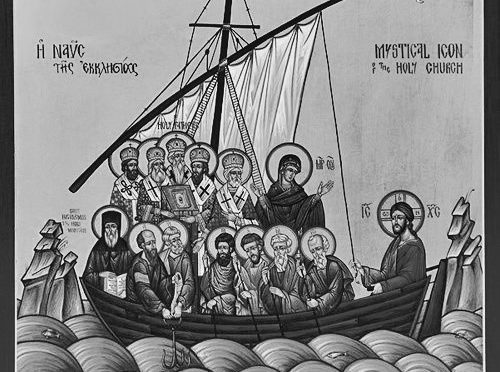
Fortunately for me, and for all of us, the faith we proclaim does not belong to us, but to the Church. It is a faith that goes before us, and comes to us as a gift. We are invited not to take it on as a burden, but to participate in it by the indwelling of the Holy Spirit. By the Holy Spirit, we are joined to the Church, the body of Christ, and her faith becomes ours as well. Saving faith in Christ comes not by a mighty effort of will and intellect, but by grace.
That doesn’t mean, however, that there is no work for my will and intellect to do. By no means! To receive the gift of God involves an attitude of humility and gratitude; we do not sit passively but train our wills actively to desire the faith of the Church. Fortunately the Holy Spirit shapes our hearts just for this purpose: to welcome Jesus, and in welcoming him, to become like him. With the Holy Spirit, my weakness becomes his strength.
In the Lutheran Book of Worship (my mother was a Protestant), the different prayers are set side by side, so that the difference in length is obvious. So as a child, I immediately saw which prayer was being used, and inwardly rejoiced if it happened to be the shortest one. Somehow I missed the drama of our redemption as it is recapitulated in the liturgy of the Eucharist!
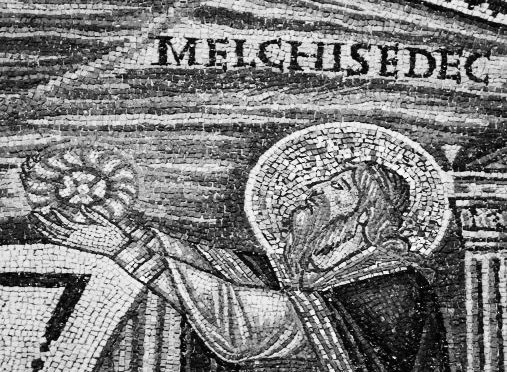
Eucharistic Prayer I would have put me off. But in zoning out, I would have missed the opportunity to recall the mystery and glory of our salvation in Jesus Christ. Not only that; Eucharistic Prayer I gets its length partly from the lists of saints—apostles and martyrs, and special mention of Abel, Abraham, and Melchizedek.
Now, the saints don’t appear in any of the Eucharistic prayers I heard regularly as a child, which is a pity. Remembering the saints connects our Sunday worship with our weekday life: ‘we ask that through their merits and prayers, in all things we may be defended by your protecting help’. We ask the Lord to ‘admit us into their company, not weighing our merits, but granting us your pardon’. Meditating on the saints (especially if we are fortunate enough to have our namesake mentioned, as two of my children are) also gives us concrete examples of faith, so we have a sense of where we’re asking the Lord to direct his attention when the priest prays that the Lord ‘look not on our sins, but on the faith of your Church’. These are the ones who have gone before us in the faith, lights who mark the way of Christ in this life and point us toward the joy of heaven. So the next time Eucharistic Prayer I begins, we should receive it as a gift, and listen for the names of those saints. We pray in communion with them as we gather for the celebration of the Eucharist, and seek to reflect the same light that shone through them as we go forth in the peace of Christ.
Part of a series by Medi Ann Volpe
Although we hear a variety of Eucharistic prayers at Mass (another legacy of Vatican II), they share the same long history. In the middle of the second century, St Justin Martyr (whose feast we celebrated last week on 1 June), explained what happens at Mass: “There is then brought to the president of the brethren bread and a cup of wine mixed with water; and he taking them, gives praise and glory to the Father of the universe, through the name of the Son and of the Holy Ghost, and offers thanks at considerable length for our being counted worthy to receive these things at His hands. And when he has concluded the prayers and thanksgivings, all the people present express their assent by saying Amen.”
St Justin describes a scene quite similar to our experience of the Mass: the offertory, prayer, and the great Amen. Outside of Mass, however, the situation was very different. The description we have of the Mass comes from Justin’s First Apology, in which he attempted to convince the Emperor not to persecute Christians just for being Christians. Christians were accused of being stupid (by Celsus in particular, later in the second century), and were “excluded from houses and baths and markets” and even from public places in general. Yet during these same years the Church grew exponentially. (See Larry Hurtado, Why on earth did anyone become a Christian in the first three centuries?) The faith that we have received from St Justin and his contemporaries, and all those who have followed in it down the centuries, has shared this same core: the bread, the wine, the thanksgiving, and our wholehearted assent. May the Eucharist strengthen us to meet all the challenges to our faith with the courage of Justin Martyr and all the saints.
The legacy of Vatican II – Mass in the vernacular – is an incredible gift for us. If you remember, or have attended, a Tridentine Mass, the difference will be stark. Whereas in the old Mass, the altar server (boy!) voiced the responses of the congregation, now we voice the responses ourselves, the whole congregation together, mostly in our own language. The act of responding, along with the different postures assumed during the Mass, makes our participation in the Eucharistic prayer more evident. Even though the priest faces the congregation, he’s not talking to us but for us. We do better to think of ourselves as gathered together around the altar. We are all fixed on a single point: the host and the chalice, from which we will receive the most precious body and blood of our Lord and Saviour, Jesus Christ.
The Catechism of the Catholic Church reminds us that “by the Eucharistic celebration we already unite ourselves with the heavenly liturgy and anticipate eternal life when God will be all in all” (CCC 1326). In the Eucharist, “we offer to the Father what he has himself given us: the gifts of his creation” (CCC 1357). Nevertheless, this offering is a sacrifice: a “sacrifice of thanksgiving to the Father…for all his benefits,” especially “creation, redemption, and sanctification” and a “sacrifice of praise by which the Church sings the glory of God in the name of all creation” (CCC 1360-1361). Far from being a prayer that the priest offers, while we are merely the audience, the Eucharistic prayer is a prayer that we offer, and God is the hearer. So let us incline our hearts to the Father and unite our voices with the words spoken by the priest as he prays:
We entreat you, almighty God,
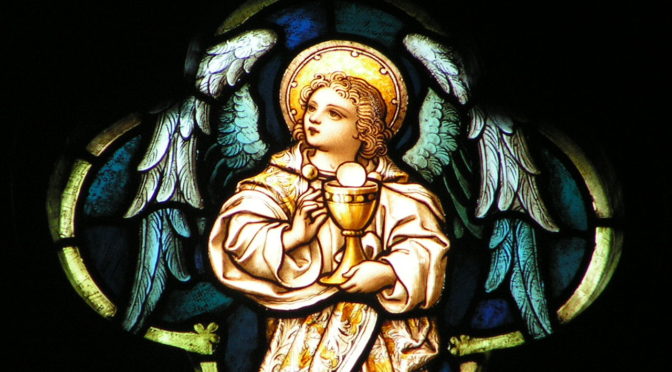
that by the hands of your holy Angel
this offering may be borne to your altar in heaven
in the sight of your divine majesty,
so that as we receive in communion at this altar
the most holy Body and Blood of your Son,
we may be filled with every heavenly blessing and grace.
Following the Council of Constantinople in 381, the emperor Theodosius had the Creed promulgated. But he did not assume that its implications were obvious. So he named several bishops, including Gregory of Nyssa, as trustworthy interpreters. Shortly after the council, Gregory wrote a treatise for catechists (who mostly would have been bishops), which detailed the tenets of the faith. The first doctrine he tackles is the doctrine of the Trinity. After setting forth the doctrine of the Trinity, he explains the purpose of such teaching: ‘a studied examination of the depths of this mystery does, in a veiled way, give [one] a fair, inward apprehension of our teaching on the knowledge of God. [One] cannot, of course, express the ineffable depth of the mystery in words, how the same thing is subject to number and yet escapes it; how is is observed to have distinctions and is yet grasped as a unity; how it admits distinction of Persons, and yet is not divided in underlying essence’. We might well ask what the doctrine of the Trinity does tell us, given that Gregory mostly seems to be saying here what ‘the knowledge of God’ doesn’t include.
For Gregory, ‘the knowledge of God’ refers in the first place to a way of life, a commitment to developing the purity of heart and mind that alone can prepare us to receive God: knowledge of God requires the indwelling of the Holy Spirit. Although Gregory would certainly admit that some people are cleverer with words and ideas than others, the real obstacle to our apprehension of God is sin. In the second place, ‘knowledge of God’ means grasping the shape of a mystery. We hold the knowledge that God is Trinity in tension with our incapacity to ‘express the ineffable depth of the mystery in words’. That is, we can be sure that God is Trinity, but not how God is Trinity. Any explanation of mechanics involved in being three and one will fall short of the reality. The rest of the treatise goes on to explain why this mystery is the essence of our salvation. In short, the doctrine of the Trinity is the basis on which Gregory can describe who Jesus is and why he can save us. Far from being an appendix to our theology, the doctrine of the Trinity is the heart of our faith.
Perhaps the liturgy of the Mass is not the first thing to come to mind when we think of Spirit-filled worship. Perhaps the whole idea of being led by the Spirit in worship seems to identify something spontaneous, and maybe a little bit chaotic. So it must have been on the day of Pentecost: one theme (‘the mighty works of God’), many voices, and many languages. Yet one of the great gifts we have, in the Bible and from the early Church, is a language for praise that is Spirit-filled. Or, it might be more apt to say, we have a language for praise that invites the Spirit to fill us.
Some of this language comes directly from the Bible. Especially in the Psalms, we find words to express the whole range of our human experience. Feeling joyful? There’s a psalm (many psalms!) for that. Feeling desolate? There are plenty of psalms for that as well. The Bible and the liturgy meet us in all those moments. But the Bible and the liturgy do not only give us words to express what we do feel. At times, in Mass and in prayer, we are called to express what we don’t feel, whether joy or sadness or even anger. Yet, we are not untrue to ourselves and our own experience: we transcend our own feelings and pray with the Church: we weep with those who weep; we rejoice with those who rejoice. The Gloria is no exception: we praise God, we bless God, we adore God, we glorify God and give God thanks, not because we feel like it, but because ‘it is right and just’. But how can we praise if we are desolate, or mourn if we are joyful? As St Paul writes, ‘the Spirit helps us in our weakness; for we do not know how to pray as we ought’ (Romans 8.26). So as we celebrate the great feast of Pentecost, let us ask God for the gift of the Holy Spirit, that we might join in exaltation with the whole Church as we sing, ‘Glory to God in the highest…’
Karl Barth (1886-1968) described theology as best done in the second person, that is, as response to God. When we gather for Mass, we offer our prayer to God the Father, through the Son, in the Holy Spirit—and the elements of the liturgy are some of the richest works of theology we will encounter. In the Gloria, we respond to the One who has called us, and who, by the Holy Spirit, gathers us for worship. We exalt God together, as a people acclaiming their king. But this is an extraordinary king, whose glory is eternally shared by the Son and the Holy Spirit. Not only that: the Son, whom we praise as ‘the Most High’ we also call by name—Jesus. And Jesus not simply ‘Only Begotten Son’ but also, simultaneously, ‘Lord God’ and ‘Lamb of God.’ He is the One who takes away the sins of the world, who takes away our sins and restores us to friendship with our heavenly King and Father.
The Gloria ought to draw our attention to the Trinitarian character of our worship. It might have been a popular hymn in the third century, but its theology is not in any way impoverished. As we sing the Gloria, we address the Father and the Son and (indirectly) the Holy Spirit. For all its apparent simplicity and repetition of phrases, the Gloria expresses, obliquely, the deepest mysteries of the faith: the Trinity and the Incarnation. We are invited to ponder the great glory of God and God’s boundless love for us as we join together in prayer. Let us do so joyfully.
The General Instruction of the Roman Missal devotes a paragraph to describing the Gloria and its setting in the Mass. “The Gloria in excelsis is a venerable and ancient hymn by which the Church, gathered in the Holy Spirit, glorifies and entreats God the Father and the Lamb” (General Instruction of the Roman Missal, 53). While the Gloria may be sung by cantor, choir, or people (or a combination of these), the instructions emphasise the indispensability of this precise text for this point in the Mass. But why?
I can suggest two reasons for the Church’s particularity about the Gloria. Its antiquity is only half a reason: the period of the Church’s history in which it originated and its genre make it a treasure of the Church’s liturgy. During the second and third centuries, when the Church underwent vigorous persecution, poems of praise (psalmi idiotici) composed by the faithful were popular. Only two of these remain: the Gloria and the Te Deum. The Apostolic Constitutions (4th century) recommend the Gloria as a morning prayer — not just for Mass, that is, but for every day! And the whole hymn is built on the song of the angels who heralded Christ’s birth: it also belongs to the rare class of hymns named ‘angelic.’ Singing the Gloria at the start of Mass gives us an opportunity to remember that we are in the mystical company of the angels and saints, and to join in their eternal praise.
The first part of the Sanctus has not always been followed by ‘Benedictus qui venit…’ as it is today. Its history is not entirely clear. At one time, the whole of the Sanctus included part of Ezekiel 3.12: ‘Blessed be the glory of the Lord from his place’ (KJV; for those interested, the Vulgate reads, ‘magnae benedicta gloria Domini de loco suo’). One conjecture how and why this sentence (Matthew 21.9) came to replace Ezekiel’s words is that it began to be used one Easter, and it just stuck. (See Bryan Spinks, The Sanctus in the Eucharistic Prayer.)
Now we, too, come near to that point in the Church’s year in which we welcome him, ‘who comes in the name of the Lord,’ echoing the very first acclamations in Jerusalem, and joining with Christians since at least the fourth century. Yet Palm Sunday arrives with a mix of joy and confusion. Jesus met a crowd in Jerusalem who seemed ready to recognise him as their king; yet he rode in on a donkey. Not the most triumphant mode of transport; and the next few days followed a course nobody (except Jesus himself) expected. Who in that crowd would have guessed that the one who came into Jerusalem amidst shouts of praise would be put to death not long after?
The Benedictus should remind us, all the year through, of the lowliness of Jesus’ human estate, and the hiddenness of his glory. Lent may be nearing its end, but the suffering of Jesus remains with us all year, even as we celebrate his resurrection and anticipate his glory each Sunday. As we live in him and he in us, we can expect a mix of joy and confusion in our lives as well. This is not bad news, however, for it is not the end: the end will come when the glory of the Lord (which fills heaven and earth!) is revealed — and his resurrection will at last be ours as well.
Part of a series by Medi Ann Volpe