Diocesan Vacancies

The Diocese of Hexham and Newcastle has the following vacancies:

* Property Surveyor based in Newcastle with extensive travel throughout the Diocese. Full-time. Two year fixed term contract.


* Justice and Peace Refugee Project Co-ordinator based in Newcastle. 18 hours per week. 12 month fixed term contract.


* Department for Education, Administrator (maternity cover) – full-time

For further information and details of how to apply please visit our website www.rcdhn.org.uk or contact us on 0191 243 3301

Happy are your eyes because they see, your ears because they hear!

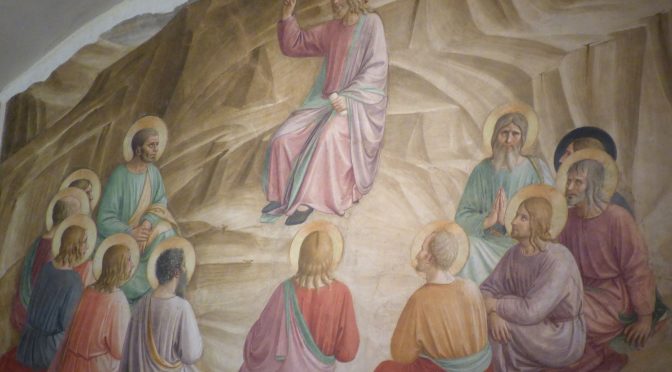
A farmer’s life is a hard one. Farmers get up early and work through the day, tending their crops. In Jesus’ time, with no machinery to do the heavy work, the life of a farmer was one of backbreaking labour. The ground was hard, the weather was unpredictable, and the farmer and his family could starve if the crops failed to grow. Many of the crowd listening to Jesus telling the parable of the sower were farmers themselves. They knew just how hard it was to get crops from the soil.

Jesus likens the seed in the parable to ‘the word of the kingdom’ – the Good News that he brings. The different types of soil represent different responses to the word. Some people will fail to understand – the word never takes root in their hearts. Some respond joyfully to the word, but their faith does not have deep roots and they fall away. Some are distracted by the things of the world. And some disciples hear God’s word and understand it; they produce a rich harvest.

As Jesus looked around the great crowd, he must have known that his teaching would not take root in the hearts of all who were listening. Some would become faithful disciples, and some would walk away. But he continued to preach the Good News of God’s kingdom to the people. Like a farmer tending the crops, Jesus tended to the people, doing all that he could to bring them to faith. Today, it is up to us, as disciples of Christ, to sow the seed of the Good News by witnessing to our faith. It may be hard work. Some people will respond with joy, and some will walk away. But the Lord calls us to work faithfully at sowing the seed

Sea Sunday

This Sunday would normally be a day of special prayer for seafarers, but because of the coronavirus pandemic, the celebration has been postponed until December. Find out more about the work of the Apostleship of the Sea in supporting seafarers at www.apostleshipofthesea.org.uk

 In the past year, St Cuthbert’s parishioners have knitted and sent 113 woolly hats to the port chaplain at Sunderland for seafarers – thank you.

Come to me, all you who labour and are overburdened

As soon as a child learns to speak, the questions start. What? Who? How? Why? Children are exploring, discovering, learning all about the world, and that’s why they have so many questions. Experts tell us that an average child asks as many as forty thousand questions between the ages of two and four. It can be exhausting for their parents, who have to try to come up with answers. Gradually, as the child grows up, the questions slow down. But it’s sad if we ever stop asking questions altogether, if that means that we are no longer curious about the world that God has made.

Jesus tells his disciples that God reveals the truth, not to the learned and the clever, but to children. Perhaps he means that God’s truth is revealed to those who, like children, have questions and are ready to learn. Those who were considered learned and clever in Jesus’ time – the chief priests, the scribes and Pharisees – generally didn’t become his disciples. They thought that they knew the answers already, and had nothing to learn from him. Jesus’ disciples, on the other hand, were mostly the poor and the outsiders – working men like Peter, tax collectors like Matthew, people burdened with sin or sickness. Jesus didn’t reject those people – he called them and welcomed them. To those who were ready to listen and learn, Jesus revealed the Good News that he had brought from God his Father. It was a message of love and forgiveness, and with Jesus, they found rest for their souls.

We are living in a strange time, when everything seems to be changing around us. We all have questions about what the world will be like after coronavirus, and no one seems to have the answers. Jesus calls us to come to him, and, like children, to trust him and learn from him. Then we will find rest for our souls.

CAFOD & Holy Island

This year’s CAFOD North East Team pilgrimage to Holy Island will take place online from 1st–11th July. From 1st July, there will be a daily reflection and prayer from Fr Jim O’Keefe, as well as shared memories of past pilgrimages, videos and stories from our partners around the world, and up to date news about CAFOD’s latest campaigns. At 3pm on Saturday 11th July, Fr Chris Hughes will live-stream a special pilgrimage Mass for us from his parish. We would also love you to share your memories and photographs of being part of a pilgrimage – from anywhere in the world!  Email us at hexhamandnewcastle@cafod.org.uk  and tell us your story.  The online pilgrimage will be hosted at https://cafodhexhamnewcastle.wordpress.com/

On this rock I will build my Church

Today we celebrate the Feast of Saints Peter and Paul. Though they are saints, they weren’t perfect. Peter was a hotheaded character; he was impulsive and generous, but sometimes unreliable. There was an irony in Jesus’ renaming Simon as ‘the Rock.’ In today’s Gospel, Peter makes a bold statement of his faith in Jesus: ‘You are the Christ, the Son of the Living God.’ But on the night that Jesus was arrested, Peter, afraid for his own life, denied even knowing his friend. He would reproach himself for his betrayal for the rest of his days. But Jesus forgave Peter, and told him, ‘Feed my sheep’ – take care of the disciples.

Peter was an ordinary working man, a fisherman. Paul was more educated; he had been trained as a rabbi, and had studied the Scriptures and philosophy. Paul, too, could be hot-tempered and outspoken. Peter became the leader of the early Church, while Paul was the first great teacher and missionary. But it was a bumpy road. We read in the New Testament of the arguments between Paul and Peter, as the faith spread and the Church grew.

What Peter and Paul had in common was that their encounter with Jesus  changed their lives. Peter was one of the first disciples to be called. The call of Paul happened on the road to Damascus. For each of them, once they had met the Lord, there was no going back. Both apostles gave their lives for the faith; they were martyred in Rome at the time of the Emperor Nero.

To be a Christian is to put our faith in Jesus, as Peter and Paul did; to say with Peter, ‘You are the Christ.’ Once we have made our act of faith, there is no going back for us. We will face challenges and we will sin. But, just as the Lord did great things through the apostles, now he wants us to play our part in building his Church.

Do not be afraid

The call to be a prophet is not an optional extra for Christians. It is at the heart of our baptismal vocation. Jesus tells his disciples to ‘proclaim from the housetops’ the teaching that they have heard from him, and to be ready to ‘declare themselves for him.’ 

The prophet’s calling could be dangerous and costly. Jeremiah continued to speak the Word of God, even when his message was rejected; even when he was ridiculed, rejected by his friends and, in the end, thrown into a prison cell. Jeremiah trusted completely in God’s care for him.

Jesus himself did not flinch from speaking out, though he knew that to do so would bring him into conflict with the authorities and lead him to the Cross. The first disciples understood clearly the cost of following Christ. Many of the early Christians gave their lives for the faith, and the witness of their martyrdom became a sign that drew others to the Church.

We too are called to be prophets. By our baptism, we have a mandate to declare ourselves for Christ, to stand up for truth and justice, and to denounce injustice and structural sin, wherever it is found. The injustices of our day are different to those of the Lord’s time, but the call to stand with those who are poor, oppressed or marginalised is the same. It takes some courage to proclaim our faith and values, but God is with us. Every hair on our heads has been counted.

Statement from the Bishops’ Conference of England & Wales on Racial Justice

We stand in solidarity with our sisters and brothers in the USA as they challenge the evil of racism and the brutal killing of George Floyd. As the US Bishops made clear: ‘we cannot turn a blind eye to these atrocities and yet still try to profess to respect every human life. We serve a God of love, mercy, and justice.’

Systemic racism is embedded in our own society. The disproportionate harm suffered by BAME people throughout the COVID-19 pandemic has highlighted profound inequalities, marginalisation and injustice here in the UK. The peaceful Black Lives Matter protests taking place in our towns and cities this week reflect the understandable anger that so many people feel about this.

As Catholics we recognise that racism is an evil which must be opposed; we all have a responsibility for actively promoting racial justice. Whenever we ignore racism or dismiss BAME people’s experience of it, we are complicit in violations of human dignity. We pray for God’s help to overcome racism in all its forms and that we might protect everyone who suffers its consequences. We are all made in God’s image

Please Pray

Please pray for the six men in formation for priesthood for the Diocese of Hexham & Newcastle, and especially for Rev Jonathon Bowes, who will shortly be ordained to the priesthood, and Luke Wilkinson, who will shortly be ordained a transitional deacon. Their ordination dates have had to be postponed due to the pandemic, and new dates will be announced when possible.

Remember!

God led his chosen people from slavery in Egypt to freedom in their own land. Israel journeyed for 40 years through the desert, and while they were wandering, God gave them water from the rocks, and manna from heaven to eat. In today’s First Reading, we hear Moses tell the people that the food and drink were a sign of God’s power, and of God’s love for them.  “Remember – do not forget,” Moses warns the people, and to this day the Jewish people recall how God provided for them in the desert.

In the Gospel, Jesus tells his disciples that he will give them his own body and blood as food and drink. It seems an incredible teaching, and in fact, many of Jesus’ disciples left him after hearing it. But he was teaching them about the Eucharist, in which his body and blood are given to us to eat and drink – living bread for those who believe. Our sharing of the living bread unites us with Christ, and with each other – St Paul says that we become one body, because we share one bread. The Eucharist is the sign and symbol of God’s love for us, his people.

Today, on the Feast of Corpus Christi, the Body and Blood of Christ, we celebrate the gift of the Eucharist. God does not leave us alone on our journey through life, but provides us with food and drink in the Mass. At the moment, the coronavirus pandemic prevents us from gathering to celebrate Mass, and we cannot receive Holy Communion. But, like the people of Israel, we are called to remember. We are not alone on our journey. We are still united with Christ and with one another, and we will gather again to receive the living bread.

Limited Reopening of Churches

HM Government has announced that churches and other places of worship can open for individual prayer from Monday 15th June. As advised by Cardinal Vincent Nichols, President of the Catholic Bishops’ Conference of England and Wales, not all churches will immediately reopen, due to the ongoing Covid-19 safety measures which are necessary to protect clergy, parishioners, staff and volunteers. 

The first five churches to reopen for individual prayer in the Diocese of Hexham & Newcastle are:

St. Mary’s Cathedral, Newcastle

St. Aidan’s, Ashington

St. Patrick’s, Consett

St. Mary’s, Sunderland

St. Joseph’s, Hartlepool

There will be a phased opening of more churches after safety measures have been assessed and implemented. Further details, including the date and times of opening, will be announced as they become available. Volunteers will be needed for the cleaning and stewarding of church buildings.

Catholic Papers

The Catholic Universe and Catholic Times are continuing to publish during the period of lockdown. From this week, the two will be combined in a single newspaper, with the Catholic Times appearing as a supplement within the Catholic Universe.

The Catholic newspapers will continue to be available in a box outside the church door, together with paper copies of the parish bulletin, and copies of ‘Walk with Me,’ a booklet of Eastertide prayers and reflections. If you pass St Cuthbert’s during your daily exercise, or while doing essential shopping, please pick up copies for yourself and your neighbours, especially for anyone who is quarantined.

You could also consider ordering the Catholic papers for delivery to your home, at https://www.thecatholicuniverse.com/  or by phone on 0161 820 5722.