
The Diocese of Middlesbrough has set up a system to allow people who do not have internet access to listen to Mass over the telephone. This service can be accessed by calling 01642 130120.

Catholic Theology Research Seminar
Salvation as Healing and Healing as Salvation. Prof David Albert Jones (Director of the Anscombe Bioethics Centre, Oxford.) Wednesday 9 June at 5pm, online. Everyone is welcome – please register at https://centreforcatholicstudies.eventbrite.com

Parish bulletins and Catholic newspapers
Job Opportunity
The Diocese of Hallam is seeking to appoint a Coordinator for Adult Formation and Mission. Details and job description here. Closing date 14th June.

Keeping in touch
As lockdown restrictions are eased, members of our community could still be feeling isolated. If you are in need of practical help, or if you just want to chat, please contact Fr Andrew on parish.priest@stcuthberts-durham.org.uk or 0191 384 3442. If you know of someone who needs support, please contact them, or let Fr Andrew know.

Marathon of prayer
Pope Francis encourages the Universal Church to pray the Rosary during the month of May, for the end of the pandemic. More information at: http://www.rcdhn.org.uk/faithandmission/marathonofprayer.php

Pastoral letter on the environment
The Bishops of England and Wales have written a Pastoral Letter on the Environment for the Feast of Pentecost. Read it here
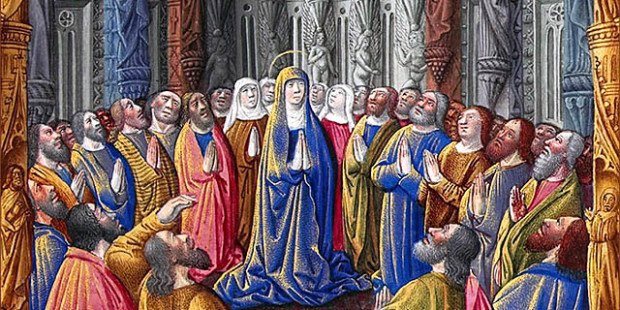
The power of the Holy Spirit
Before he ascended to his Father, Jesus promised his disciples that he would send them the Holy Spirit. Today, on the Feast of Pentecost, the fiftieth day after Easter Sunday, that promise is fulfilled. The Holy Spirit sounds like the wind and looks like fire. There are people in Jerusalem from all over the world – ‘every nation under heaven’ – and miraculously, they can all understand the preaching of Jesus’ disciples. The difference of language that separates us from one another is overcome by the power of the Holy Spirit.
Every person is unique. We look different, we speak different languages and we have different customs and beliefs. But we all share the same human nature. Each human person is made in God’s image. The Holy Spirit unites us, without making us all the same; we remain as different as God makes us. The Spirit makes us truly human.
St Paul describes the gifts that the Holy Spirit brings us: love, joy, peace, patience, kindness, goodness, trustfulness, gentleness and self-control. We can’t achieve these qualities on our own, but, if we open our hearts, the Holy Spirit will transform us into the people that God planned us to be. The Spirit makes us truly human.

Laudato Si’ Week 2021
Laudato Si’ Week 2021 will take place from May 16 – 25, with global events and hundreds of local and regional events organized by partners around the world, celebrating the Church’s journey towards ecological conversion. Details at www.rcdhn.org.uk
Mental Health in Education: A Catholic Approach
An online conference offered by Leeds Trinity University. Friday 28th May, 9am-3.30pm. Details and registration at https://www.leedstrinity.ac.uk/events/the-trinity-conference-2021-mental-health-in-education-a-catholic-approach.php
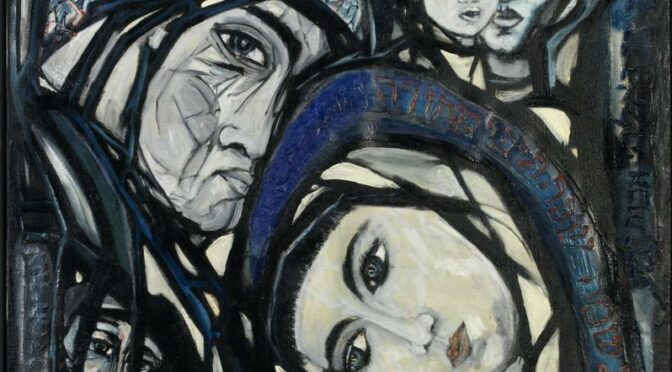
FAITH WITNESS AGAINST HASSOCKFIELD
In October of this year, the UK government plans to open an Immigration Removal Centre at Hassockfield on the site of the former Medomsley Detention Centre, near Consett, County Durham.
This centre will be for 80 women seeking asylum in the UK. The proposal is inhumane, unjust and incompatible with our faith which calls us to recognise the intrinsic dignity of each person. These women are not criminals to be locked up but people like ourselves who have the right to a place of safety and to be treated with respect and compassion. An interfaith prayer service will take place on Sunday 23rd May at 3.00pm in as many churches and places of worship as possible as part of a united faith response against Hassockfield. The Diocesan Youth Ministry Team will join with the Faith Witness and will go live at the same time on YMT’s Facebook page.

Father, keep those you have given me true to your name
There are two important ideas in today’s Gospel reading: the truth and the world. When Jesus speaks about ‘the world,’ he often means the powers of the world; those who hated him and opposed him. Here, he says that his disciples ‘do not belong to the world,’ because he has chosen them. Just as worldly powers condemned Jesus to death on the Cross, so too they will hate and persecute Jesus’ followers.
The rulers of the world hated Jesus because he spoke the truth, without fear. He condemned injustice and the abuse of power. He took the side of the poor and the powerless. No wonder the powerful hated him and, in the end, tried to silence him. Jesus knows that his disciples can expect the same treatment. They will speak the truth, and worldly powers will try to silence them. Jesus prays to his Father to ‘consecrate’ his disciples – to set them apart, for the sacred duty of speaking the truth that they have learned from him.
As disciples of Jesus, we too are consecrated in the truth. Jesus calls us to speak the truth and to live the truth, even if the world doesn’t want to hear it. It’s not an easy vocation; but the world needs to hear the truth of Jesus Christ.
World Communications Day
World Communications Day is celebrated this Sunday 16th May. The theme, chosen by Pope Francis, is ‘Communicating, encountering people as and where they are.’ Information and resources at https://www.cbcew.org.uk/home/events/world-communications-day-2021/ There will be a retiring collection in support of the Church’s work in communications.

Diocesan Mass in Celebration of Marriage and Family Life

Pentecost Renewal Retreat
Pentecost renewal retreat at Minsteracres. ‘Jesus breathed on them and said; Receive the Holy Spirit.’ In this retreat we will reflect on the role of the Holy spirit in John’s Gospel and pray for the release of the Spirit in our lives, that we may learn how to act justly, love tenderly, and walk humbly with our God. There will be times of input, times of silence and times of prayer and praise to help us open ourselves more fully to God. Led by Fr Chris Thomas. Friday 21-Sunday 23 May. Suggested donation: £175. See www.minsteacres.org for details.
Global Healing
Global Healing is an initiative that highlights our need to care for our common home, the earth. It supports Laudato Si’ the encyclical written by Pope Francis on how our faith calls us to urgent action to care for the earth. Information and resources at www.rcdhn.org.uk
I call you friends
How do we know that we are loved? Actions speak louder than words. We know that someone loves us because they show it, in the way that they take care of us. Only if a child experiences love, and grows up feeling loved and secure, can they learn to love others.
Today’s Gospel reading comes from the Last Supper. Jesus is giving his final teaching to his disciples, before going to his death on the Cross. He tells the disciples, ‘Remain in my love.’ He has shown his disciples what love means, by his life and teaching. Now he is about to give the greatest sign of all, by laying down his life on the Cross. There is no greater love. And with the gift of love, there is a challenge. Jesus tells the disciples, ‘Love one another as I have loved you.’ This is his commandment, and it comes with a promise. Jesus calls the disciples to be his friends; no longer servants following orders, but friends who show to one another the same love that they have received from Jesus.
Jesus’ call is for us, too. He has given us the example of love and, like the first disciples, he calls us to follow his example, and to love one another as he has loved us. He wants to call us his friends.
Ushaw Lecture
Black Saints and the Global Catholic Church, 1500-1750. Dr Erin Rowe (Johns Hopkins University, USA.) Tuesday 11th May at 6pm, online. Register at https://centreforcatholicstudies.eventbrite.com
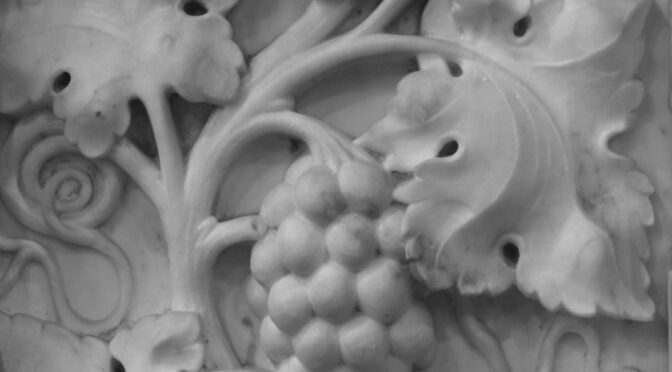
I am the vine, you are the branches
Nothing is more important than keeping in touch with the people we love. The coronavirus pandemic has forced us to find different ways of staying connected, and has made it seem more precious than ever. We need love and friendship to feel fully alive.
Jesus wants to stay connected with us, too. In today’s Gospel, Jesus tells his disciples: ‘I am the vine, you are the branches.’ A branch can only grow if it remains attached to the tree. We can only be fully alive and flourishing if we remain connected to Jesus, the vine, and live in his love.
We connect with Jesus through prayer. In the Gospels, we often see Jesus spending time on his own, in a lonely place, praying. Jesus drew strength for his mission from the time that he spent alone with God the Father. He needed to connect with the Father who loved him, and we need to give time to connecting with Jesus.
We connect with Jesus, too, through the life of the Church. In today’s First Reading, we meet Saul, just after his dramatic conversion on the road to Damascus. Saul would become St Paul, the greatest and most fearless preacher of the Gospel. But, in spite of the extraordinary call that he received from God, Paul didn’t try to preach the Gospel on his own. He worked together with the other apostles, and shared in their ministry. Jesus wants us to ‘bear much fruit’ for him. We can only be fruitful if we remain connected, to Christ and to his Church.

St Cuthbert’s Parish Annual General Meeting
St Cuthbert’s Parish Annual General Meeting will be held on Thursday 6th May at 7.00pm, on Zoom. If you would like to raise an item for discussion at the AGM, please contact Fr Andrew. For Zoom login details, see the ‘St Cuthbert’s Parish Community’ Facebook group, or email margaretdoyle1066@sky.com