Category Archives: Spiritual

Come to Me

Life is not easy. We all have our “yoke” to carry: the daily challenge of earning a living or caring for a family; the struggles of illness or disability. We all, sometimes, feel weary and “overburdened,” as Jesus says in today’s Gospel.

God doesn’t watch our struggles from a distance. Jesus, the Son of God, was truly human, and he shared in all that we experience. He felt hungry, tired and discouraged. He wept at the loss of friends. The life of Jesus reveals God’s compassion for us. God is closest to us at the saddest and most difficult times in our lives, and God has a special love for the poor and powerless.

Jesus calls us to live our lives by his law of love: love of God and love of neighbour. His “yoke” is easy to carry, because he calls us to be free, truly alive and truly ourselves. His invitation is offered to everyone: Come to me.

Do not be afraid

It can be difficult to witness to our Christian faith. We may feel afraid that if others – friends, work colleagues or strangers – know that we are Christians, they will jump to conclusions about who we are and what we believe. We fear being labelled as strange or eccentric.

Jesus knew that it wouldn’t be easy for his apostles to witness to him in the world. They would face persecution and martyrdom, just as the prophet Jeremiah did, for faithfully proclaiming the word of God. But Jesus reassures the Twelve. They are loved and cherished by God. Every hair on their heads has been counted.

We witness to our faith, above all, by our lives. Christians should be known as people who act justly, and who show care and compassion to their neighbours. The Lord calls us to trust in him, to let our faith be known, and to take the risk of living bravely and generously. He is with us every step of the way.

If you love me you will keep my commandments

As we move through Eastertide, we begin to look forward towards Jesus’ return to his Father, and the descent of the Holy Spirit at Pentecost. Jesus tells his disciples that the Spirit will come as an Advocate, or champion, to strengthen and guide the Christian community. The Spirit will be the driving force of the early Church, in the face of difficulty and persecution. Jesus draws believers to share in the love that he himself shares with God the Father; “I am in my Father, and you in me and I in you.” This is the love that sustains us as Christians. But even in difficult times, the Church cannot only look inwards. Today’s first reading describes Philip going to preach among the Samaritans – the age-old enemies of the Jews – and receiving a joyful welcome, while, in the second reading, Peter urges the first Christians to be witnesses to their neighbours. The Church is a community of believers who are strengthened by the love of God to look both inwards and outwards: to love and support one another, and to bring the Good News to the whole world.

Do not let your hearts be troubled

We seem to live in unsettled and troubling times. Many people struggle to find steady work and a secure home for their families. Our country, and our world, seem unstable and divided. In the Church, too, it’s a time of uncertainty and uncomfortable change. We might be tempted to try to ignore the changing world around us, or to hark back nostalgically to a past that seems better.

At the Last Supper, Jesus’ disciples are troubled because they know that change is coming. Judas has already gone out into the night, to betray Jesus. Peter’s denial of Christ has been foretold. The disciples realise that the Lord will not be with them for much longer, and they fear for the future.

Jesus’ response to their fears is to tell them, “Do not let your hearts be troubled.” He will suffer and die, but his Father will raise him up, and his Resurrection will bring salvation to the world. Only by putting our trust in Jesus can we find our way through a world that seems strange and confusing. He is the Way, the Truth and the Life.

I have come so that they may have life and have it to the full

The life of a shepherd probably isn’t very different today from what it was in the time of Christ. We might have a romantic idea of the shepherd strolling through the fields with his flock, but in reality, it’s a hard and exhausting job. The shepherd is out in all weathers, caring for the sheep and keeping them safe from danger.

Jesus describes himself as a good shepherd, who knows his sheep, and calls them one by one. Unlike the leaders of Israel in his own time, who exploited their positions for their own power and advantage, Jesus’ concern is for the sheep – his disciples. His desire is for the sheep to have life to the full.

Today is Good Shepherd Sunday, when the Church prays for vocations to the priesthood and consecrated life. Pope Francis says in his message for today, “The People of God need to be guided by pastors whose lives are spent in service to the Gospel.” The pastors and ministers of the Church are called to model themselves on Christ, the Good Shepherd who knows his sheep by name and keeps them safe. Let us pray for many young people to respond to the challenging call of Christ.

Meeting Jesus on the road

The two disciples walking to Emmaus know all the facts about Jesus: where he came from, what he said and did, and the circumstances of his terrible death. They even know about the empty tomb. But the story makes no sense to them. To follow Jesus, and be one of his disciples, was exciting and life-giving: but now, it all seems to have ended badly. The adventure is over, and the disciples are leaving Jerusalem, sad and downcast.

In the time that Jesus spends with the two disciples – unrecognised – he changes everything for them. He opens the Scriptures and explains the prophecies that were pointing to him. He makes their hearts burn within them. Finally, they recognise Jesus when he breaks the bread for them.

Knowing about Jesus can never be enough for a disciple. The facts alone won’t change our lives. But when we encounter the risen Christ in person, then it will begin to make sense, and our hearts will burn within us. Jesus is walking with us on the journey of life, even if we don’t recognise him. We meet him as the first disciples did, in the Word of God, and when he feeds us in the Eucharist.

Unbind him, let him go free

Today’s Gospel shows us the humanity of Jesus. He weeps at the death of Lazarus, his friend. He shares in the grief of Martha and Mary. But this miracle is also a sign that Jesus is the Son of God, with power over life and death. Lazarus was thoroughly dead, four days in the tomb. At a word from Jesus, he is restored to life, and returned to the people who love him. It’s a stunning demonstration of Jesus’ power, and of his unity with God his Father. It brings many people to believe in him.

God’s will is for all his people to be fully alive and free. When we choose sin, we choose to be less alive. We may be tempted to hide in the dark tombs that we make for ourselves. But Jesus comes to seek us. Like Lazarus, he calls us to come out of our tombs, and to enjoy the fullness of life and freedom that comes from faith in him.

None so blind as those who will not see

In Jesus’ time, it was taken for granted that sickness or disability was God’s punishment for sin. This idea lies behind the disciples’ question to Jesus: “Who sinned, this man or his parents, for him to have been born blind?” The man not only has to live with his blindness; he is also despised by those who judge him as a sinner, and has to live by begging.

Jesus rejects this whole way of thinking. By giving the blind man his sight, he also gives him dignity and independence. God’s power is displayed in the man; he can now recognise Jesus as a prophet, and witness to him courageously in the face of the Pharisees’ hostile questioning.

The Pharisees, in contrast, reject Jesus, even when they can see the miracles he works. They “know” that Jesus must be a sinner, because he heals the sick on the sabbath. Their reasoning blinds them to the truth that Jesus is the Son of God.

The blind man has been given his sight by Jesus. The Pharisees remain wilfully blind. By the gift of faith, God opens our eyes to see Christ, and our ears to hear the Good News that he brings. The season of Lent is a privileged time to renew the gift of faith, and to clear away the obstacles that can prevent us from seeing Christ clearly.

Breaking down the barriers

John tells us that “Jews do not associate with Samaritans.” This is an understatement. In the time of Christ, Jews and Samaritans hated and despised one another. This is why the Samaritan woman in today’s Gospel reading is so surprised when Jesus asks her for a drink.

But Jesus simply ignores such divisions, based on prejudice and suspicion. As a Jewish man, it was scandalous for him to be seen even speaking in public to a woman who was a Samaritan and a stranger. But Jesus sees another human being, who needs to hear the Good News.

After speaking with Jesus, the woman hurries back to her home town, to bring her own people – Samaritans – to hear the Jewish prophet she has met. Jesus has evangelised her – brought her good news – and now she becomes an evangelist to others. She tells the people, “Come and see,” the same invitation that Jesus offered to his first disciples. Her encounter with Christ has brought her to believe in him, and given her the desire to share her faith with others.

Pope Francis urges us to be an evangelising and missionary Church. We can only evangelise effectively by following the example of Christ – sitting down with others, listening to their stories, and inviting them to come and see.

Truly God and truly human

Jesus is the Son of God, and he is also truly human. He experiences everything that we do – even the temptation to sin. After a long time of fasting in the desert, Jesus feels hungry, just as we would. It’s tempting to use his miraculous powers to conjure up food for himself. As he looks ahead to his ministry, he must realise that it will be a hard road – so it’s tempting to take the easy way out, and win the people over by a spectacular demonstration of his power. Or to give in to the powers of the world, and become a worldly leader.

Adam and Eve are deceived by the lies of the devil. Their story symbolises the way that we can be taken in by the superficial attraction of sin. We choose what seems immediately tempting, instead of what is truly good. One sin leads to another, until it seems impossible to find the way back to truth and integrity.

Jesus stands firm in the face of the devil’s temptations. To sin would be to go against his complete love and trust for his Father. He shows us the way to choose truth instead of lies, and what is truly good instead of what is only superficial. Our Lenten penance should help us to stand firm, and make the right choices in our lives.

Love your enemies

When Jesus teaches us to love God and love our neighbour, we can probably accept it as an ideal to aspire to, even if it seems challenging. But when he tells us to love our enemies, surely he has gone too far? The Old Testament law of “Eye for eye and tooth for tooth” was meant to set a limit on revenge. Rather than allowing violence to escalate, the law permitted the wronged party to exact vengeance that was equal to the harm they had suffered. It was a law based on a realistic understanding of human nature.

But Jesus wants to transform our human nature. Instead of meeting violence with violence and hatred with hatred, he teaches his disciples to love their enemies, even in the face of oppression and injustice.

Jesus is giving us good news, not good advice. He is not asking us to do anything that he did not do himself. We can see the teachings of the Sermon on the Mount as a description of Jesus himself, who did turn the other cheek to violence, and who carried his own Cross to Calvary. He is asking us to follow him.

Do Not Be Afraid

As we come to the end of the Church’s year, the Sunday Gospel readings focus our attention on the “end times.” Jesus foretells the destruction of the magnificent Temple in Jerusalem, which took place in 70 AD, when the Romans ruthlessly put down a Jewish uprising. He warns his disciples to expect natural disasters, turmoil and persecution of Christians. But the Lord reassures his disciples that God will be with them in the time of trial – not a hair of their heads will be lost.

When the world around us seems confusing and frightening, these words of the Lord encourage us to stand firm in our faith. St Paul tells us to “go on quietly working” – doing the right thing with patience and courage. The truths of the Gospel remain true for all time. God is with us.

He is God of the living

The Sadducees don’t believe in resurrection or eternal life – a belief which grew up late in the Old Testament era. They challenge Jesus with a story that seems to show the absurdity of such a belief: a story of a woman married in turn to seven brothers, who all die, one after the other. But Jesus challenges the Sadducees directly. Their error lies in underestimating God’s creative power, and the depth of God’s love for his people. God created all life, and God’s plan for each one of us is eternal life. In the kingdom of heaven, God’s children will be fully alive, with a life that will make our life in this world seem like a pale imitation. Our faith in eternal life shouldn’t lead us to devalue our life in this world, but to live as well as possible, in preparation for the life to come. Our God is God of the living.

Your faith has saved you

Jesus meets ten lepers. Ten men who are excluded from society – unable to take part in family life or worship, because their condition makes them “unclean.” They have to live outside the town, and are forbidden any sort of contact with their fellow men and women. They see in Jesus a man who has both the compassion to care for them, and the power to heal them.

When Jesus cleanses the ten lepers, he not only cures their illness – he also restores them to full membership of society. They can go home – Jesus has given them back their dignity. But only one man, a Samaritan, comes back to thank Jesus. He praises God, because he knows that only God, working in Jesus, could have brought about his cure. The gift of healing has brought him to faith in Christ.

Our faith in Christ should prompt us to ask the Lord for all that we need, believing that he has power to heal us. And if our faith is alive and active, it will lead us to recognise God at work in our lives – and remind us to give thanks.

Valete in Domino!

The day I was installed as Parish Priest of St Cuthbert’s, the gospel recounted Christ’s injunction to James and John: “Anyone who wants to become great among you must be your servant, and anyone who wants to be first among you must be slave to all.” (Mark 10:43-44); in this way, one who is called to Christian leadership must imitate Christ the servant.

It is not for me to judge my service here in Durham; that I must leave to you and to the Lord. But I must thank all in Durham – in the parish, the diocese, the University and the city – for the warm welcome given to me and to my Dominican confrères over the past four years, and for the support you have given us as we have sought to serve you and Christ in this place. I hope that together we have been able to advance the mission of the Church in making the Kingdom present; and for our failures and shortcomings I ask your forgiveness.

Ultimately, however, we are called to be servants not merely of one community, but to be “slaves to all“. The Church calls us elsewhere, and we follow Christ’s call: “I must preach the good news of the kingdom of God to the other cities also” (Luke 4:43).

In this Sunday’s second reading, St Paul reminds Philemon, on sending back his slave Onesimus, that the bond of Christian fraternity is much greater than that of slavery. The Dominican friars may no longer be serving you here in Durham, but we remain your brothers in the Lord. Please keep us in your prayers, as we will you, and may God continue to bless this community.

Your brother in Christ,

fr. Benjamin Earl OP
Parish Priest

Look not on our sins

‘Look not on our sins, but on the faith of your Church’

This prayer, tucked away between the Lord’s prayer and greeting each other in the peace of Christ, always encourages me. However much I might fail to live up to the calling of Christ, there is a greater body, a greater reality, that holds the faith for me when I am too weak to hold it for myself. My feeble attempts to believe and to follow Jesus often founder, and my most ardent desire to be ‘all for Jesus’ (in the words of Mother Teresa) soon cools.

Fortunately for me, and for all of us, the faith we proclaim does not belong to us, but to the Church. It is a faith that goes before us, and comes to us as a gift. We are invited not to take it on as a burden, but to participate in it by the indwelling of the Holy Spirit. By the Holy Spirit, we are joined to the Church, the body of Christ, and her faith becomes ours as well. Saving faith in Christ comes not by a mighty effort of will and intellect, but by grace.

That doesn’t mean, however, that there is no work for my will and intellect to do. By no means! To receive the gift of God involves an attitude of humility and gratitude; we do not sit passively but train our wills actively to desire the faith of the Church. Fortunately the Holy Spirit shapes our hearts just for this purpose: to welcome Jesus, and in welcoming him, to become like him. With the Holy Spirit, my weakness becomes his strength.

From fr. Ben…

To all at St Cuthbert’s:

Dear brothers and sisters,

It is the task of all Christians – and in a particular way members of the Order of Preachers – to proclaim the Good News we have received. It is never pleasant for us to have to give or receive bad news.

I am therefore particularly grateful that our Prior Provincial, fr. Martin Ganeri OP, came to Durham last weekend to tell mass-goers at St Cuthbert’s personally of the decision of the Friars’ recent Provincial Chapter to withdraw the community of friars from Durham (as well as Glasgow and Newcastle). The decision was made in order to strengthen the communal life in a Province that has become increasingly stretched in recent years, and there is more information on the Province’s website, www.english.op.org.

Since the announcement, many people have spoken to me or written to express their emotions: sorrow, dismay, distress, surprise, perplexity; even devastation and anger. I understand those emotions and have shared in many of them; this was not the way I had hoped, planned or expected to leave Durham. But I am grateful too for the understanding, sympathy and promises of prayers expressed by so many.

I thank the Diocese and to Bishop Séamus for the generous welcome and the trust placed in us four years ago when St Cuthbert’s Parish and the University Chaplaincy were entrusted to the Order. I am desperately sorry that this charge is being returned after such a short time. The Bishop clearly understands the vital importance of the Church’s ministry in and around Universities, and is appointing a dedicated and experienced Parish Priest and University Chaplain in the person of Fr Andrew Downie. I know he will receive a warm welcome from all here when he comes in the autumn.

There will be opportunities in the coming months for me to express my thanks to all at St Cuthbert’s for their support and welcome, whatever anxieties there might have been about these strange friars, and to ask forgiveness for my faults, failures and shortcomings.

I will be in Oxford on Sunday 10 July for the Ordination of three of our young friars: frs. Matthew Jarvis and Oliver Keenan to the priesthood and fr. Jean-Baptiste Régis to the diaconate. These occasions are signs of hope for the future of the Church; please keep these brothers in your prayers. At the request of the Master of the Order, I will then be in Bologna 15 July – 5 August providing canonical support to our General Chapter. I expect to be back in Durham for the Sundays of August.

Whatever bad news, disappointments or farewells may come our way, we must never forget our Christian mission to preach the Good News: that Christ is the first-born from the dead, and that everything in heaven and everything on earth is reconciled through him and in him when he made peace by his death on the cross (cf. Col 1:18, 20). Let us pray for each other at this time, that our dedication to proclaiming that joyful truth may be renewed.

fr. Benjamin Earl OP
Vicar, Parish Priest and Chaplain

The kingdom of God is at hand

The gospel passage for this Sunday makes clear the challenge of proclaiming the gospel. Christ sends out the seventy-two disciples with nothing but the Good News that the “kingdom of God is very near” (Luke 10:9).

There must have been tremendous uncertainty among those seventy-two about how they would even survive, with no guaranteed food or lodging; most likely they had had little chance to plan. Yet they are given confidence that the Lord’s message is true; the Lord himself is to visit the places his disciples prepare.

We face uncertainty in the future too: the Diocese this weekend launches the next stage of the Forward Together in Hope process, which will inevitably mean change in many places. St Cuthbert’s parish and the University Chaplaincy too will inevitably face change and uncertainty in coming months.

But amid all this we must remember that we are disciples; the Lord is with us. The message we proclaim is true and is good news, and where we are faithful in proclaiming him, the Lord will come – and we will have cause to rejoice, not in our achievements, but in the promise of the kingdom.

Remain Free

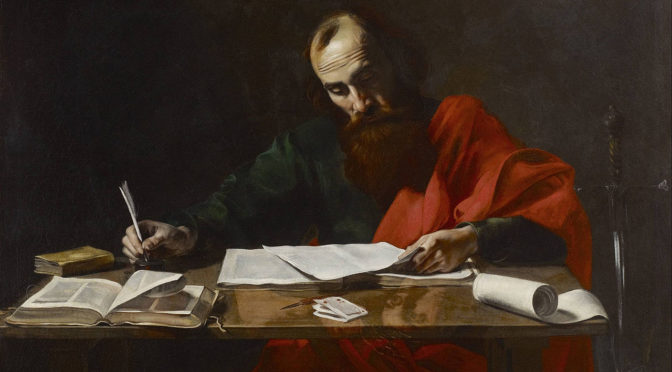
We speak of Christ’s saving work as freeing us from sin. St Paul reminds the Galatians in this Sunday’s second reading (Galatians 5:1) that “he meant us to remain free”.

While freedom can mean a freedom from constraint and a freedom to choose, this sort of freedom entails an obvious risk. Free to choose as we wish, we can choose to return to our previous slavery. We are free to give up our freedom. Put in those stark terms it seems a particularly stupid thing to do; and yet all of us, despite being freed from sin by Christ through baptism, keep turning back to sin. We turn back in pride to a self-indulgence which limits us from being what each of us is called to be, and what we are called to be as a community.

St Paul echos Christ himself by reminding us that the whole of the Law may be summarised as “Love your neighbour as yourself”… St Paul obviously taking love for God as read. Thinking of others and acting for their good is what love is – a love that is free from limit. Being absorbed with self places limits on love, and renders us slaves once again.

Even physical captivity does not limit our freedom; indeed St Paul himself showed his love for the churches by continuing to write to them and pray for them while imprisoned.

The move we love, the more we enjoy the true freedom given us by Christ.

We celebrate the principal feast of St Paul, along with St Peter, on Wednesday 29 June.

Why the long prayer? Eucharistic Prayer I

In the Lutheran Book of Worship (my mother was a Protestant), the different prayers are set side by side, so that the difference in length is obvious. So as a child, I immediately saw which prayer was being used, and inwardly rejoiced if it happened to be the shortest one. Somehow I missed the drama of our redemption as it is recapitulated in the liturgy of the Eucharist!

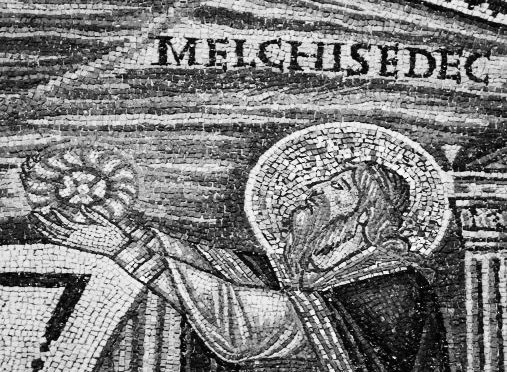
Eucharistic Prayer I would have put me off. But in zoning out, I would have missed the opportunity to recall the mystery and glory of our salvation in Jesus Christ. Not only that; Eucharistic Prayer I gets its length partly from the lists of saints—apostles and martyrs, and special mention of Abel, Abraham, and Melchizedek.

Now, the saints don’t appear in any of the Eucharistic prayers I heard regularly as a child, which is a pity. Remembering the saints connects our Sunday worship with our weekday life: ‘we ask that through their merits and prayers, in all things we may be defended by your protecting help’. We ask the Lord to ‘admit us into their company, not weighing our merits, but granting us your pardon’. Meditating on the saints (especially if we are fortunate enough to have our namesake mentioned, as two of my children are) also gives us concrete examples of faith, so we have a sense of where we’re asking the Lord to direct his attention when the priest prays that the Lord ‘look not on our sins, but on the faith of your Church’. These are the ones who have gone before us in the faith, lights who mark the way of Christ in this life and point us toward the joy of heaven. So the next time Eucharistic Prayer I begins, we should receive it as a gift, and listen for the names of those saints. We pray in communion with them as we gather for the celebration of the Eucharist, and seek to reflect the same light that shone through them as we go forth in the peace of Christ.

Part of a series by Medi Ann Volpe